



Niu Lai and Algorithmic Content Homogenization
#AI Marketing Insights ·2026-08-15 22:23:48


What the Handmade Appeal of Niu Lai Reveals
About Traffic Homogenization in Omnichannel Promotion
When AI mass-produces content and algorithms control traffic allocation, how much room remains for brands to express themselves and choose their own path?
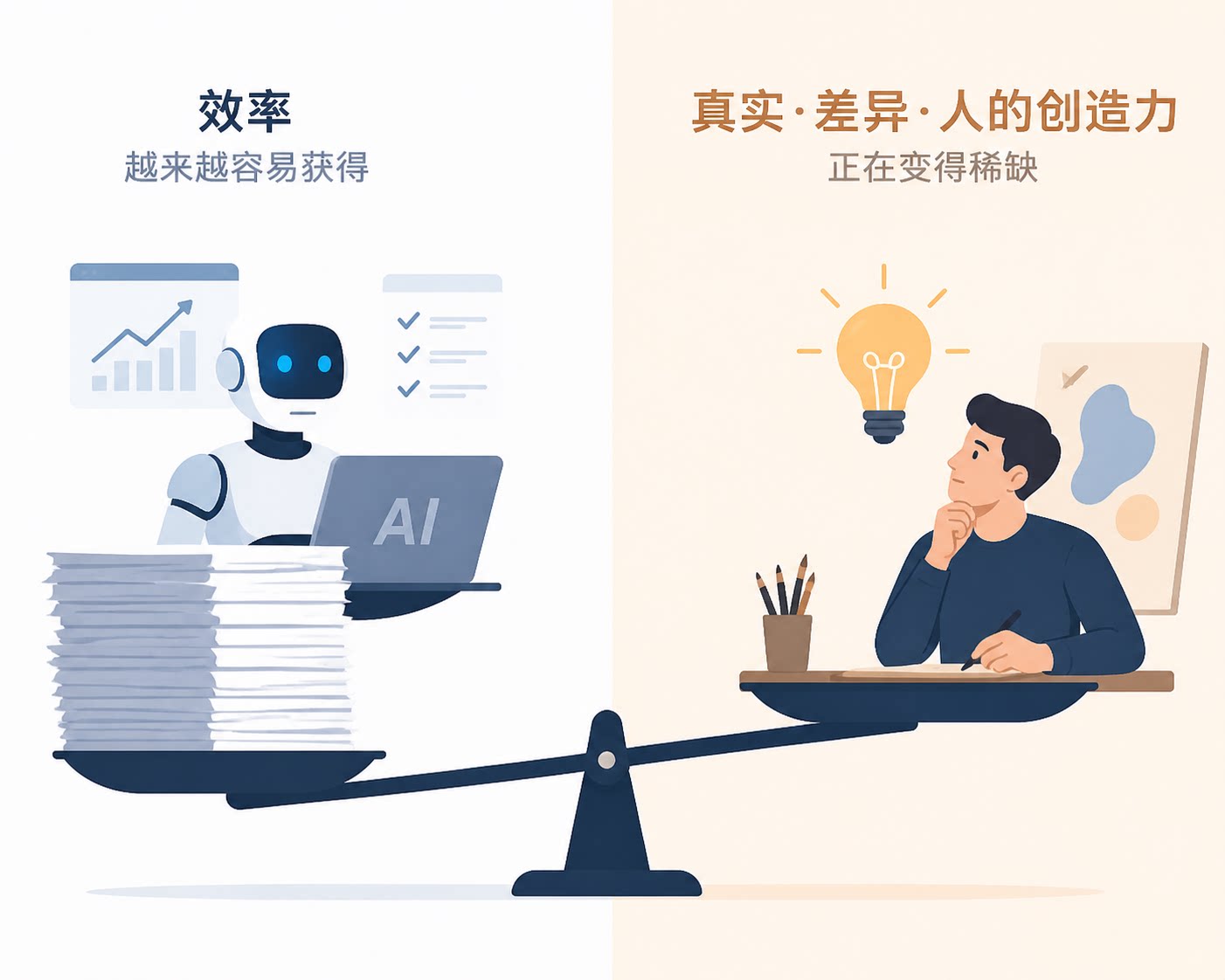
Efficiency is becoming easier to obtain, while authenticity, differentiation and human creativity are becoming scarce.
The recent breakout success of the film Niu Lai has made its commitment to handcrafted production rather than reliance on AI a topic worth examining. At a time when AI is rapidly entering film, design, advertising and content creation, an expression that is less standardized, less industrialized and visibly shaped by human hands can give audiences a long-missed sense of authenticity.
It also brings to mind the “omnichannel promotion” model now being advanced aggressively across e-commerce.
More platforms are reducing merchants' room to configure campaigns independently, handing audience selection, bidding strategy, traffic matching and budget allocation to algorithms. All merchants seem to need to do is upload assets, set a budget and wait for the system to produce a result.
This model lowers the barrier to media buying and improves operating efficiency. Yet when every merchant is guided into the same delivery logic, uses similar tools, follows the same performance standards and competes for the same users, another question emerges:
CENTRAL QUESTION
Does omnichannel promotion help merchants discover growth opportunities,
or does it push every merchant toward the same operating model?
| 01 | As Configuration Options Disappear, Merchant Differentiation Disappears Too |
Media buyers once had to study keywords, audiences, times, regions, placements and bidding strategies. Different operators could form entirely different delivery approaches based on product characteristics, customer contexts and their own experience.
Some pursued precise niche audiences, while others built awareness gradually through content. Some concentrated on search demand, while others developed repeat purchases from existing customers. Some prioritized immediate sales, while others accepted continued investment in long-term brand building.
Not every method delivered immediate success, but together they created a diverse market.
| Earlier Granular Media Buying Greater independent control over audiences, keywords, schedules, regions, bids and other settings | Today's Omnichannel Delivery Upload assets, set a budget and leave most decisions and allocation to the system |
When a system favors products with higher click-through rates, faster conversions and more competitive prices, every merchant is forced to optimize around similar metrics:
- Creative must capture attention in the first three seconds;
- Headlines and value propositions must be extremely direct;
- Prices must create a strong visual impact;
- Content must stimulate demand or create anxiety quickly;
- Campaigns must produce conversion data as soon as possible;
- Products must cater to audiences the system has already validated.
Merchants may appear to be using intelligent media buying, but increasingly they are sitting the same standardized examination under rules written by algorithms.
| 02 | When Scale Depends on Creative Alone, Marketing Becomes an Asset-Consumption War |
| Asset Production High-Volume Testing |
Algorithmic Selection Rapid Matching |
Traffic Concentration Efficient Assets |
Competitors Copy More Intense Competition |
Omnichannel promotion is right to emphasize creative. In a feed environment, an asset is the first bridge between a product and its audience. Strong creative improves click-through rate, reduces acquisition cost and helps the system identify prospective audiences faster.
But when campaign performance is attributed too heavily to creative, marketing can easily shift from brand building to asset consumption.
One asset scales today and competitors quickly imitate it. One expression converts tomorrow and the entire sector begins copying it at scale. Similar scripts, visuals, openings and promotional language then appear before users again and again.
Have you also seen these lines repeatedly?
“You still haven't heard?”
“Last day!”
“Stop overpaying!”
“The factory owner finally reveals the truth!”
The system allocates traffic while merchants produce an endless supply of creative—this may not be intelligent marketing, but a more intensive form of competitive escalation.
| 03 | Algorithms Seek an Optimum, but Markets Need More Than One Answer |
Algorithms naturally seek the statistically optimal solution: which audiences are more likely to buy, which prices are more competitive, which visuals earn higher click-through rates and which messages convert quickly.
Large datasets can calculate and validate all of these questions repeatedly, but business is not only a calculation.
An article may be well structured and fluent, yet leave no lasting impression;
An image may look polished and standardized, yet lack the details of real life;
A video may be fast and information-dense, yet fail to create lasting resonance.
This is not an inherent problem with AI; it happens when we treat AI as the standard answer. The same applies to omnichannel promotion. Algorithms can help merchants discover patterns, but cannot form a brand's values; they can identify users, but cannot fully understand complex human emotions and needs.
AN ALGORITHM CANNOT ANSWER FOR YOU
Why must customers choose you?
| 04 | Why Are Merchants Losing Confidence as Traffic Allocation Becomes More Uniform? |
Many merchants share the same experience: promotional tools are more intelligent and easier to operate, but doing business has not become easier.
When campaigns once underperformed, operators could adjust keywords, audiences, regions, schedules and bids in search of a breakthrough. Now that substantial control has moved to the system, merchants facing volatile results can often do little beyond replacing assets, changing budgets or cutting prices.
| STEP 01Existing Sales | STEP 02Receive Traffic | STEP 03Generate Sales | STEP 04Advantage Concentrates |
If a new product must have sales before it can receive traffic, but must receive traffic before it can generate sales, smaller merchants and innovative brands become trapped in a cycle that is difficult to break.
| 05 | E-Commerce Can Never Fully Replace Distinctive Physical Stores |
E-commerce transformed retail efficiency, but it still cannot fully replace genuinely distinctive physical businesses. Consumers need more than lower prices, greater convenience and higher efficiency.
A thoughtfully designed café, a bookshop with a distinctive selection or a small store built on craft and warmth may not deliver the highest conversion efficiency in a platform algorithm's eyes, yet it can leave customers with a unique memory.
E-commerce will not replace every physical business, AI will not replace every creator, and omnichannel promotion should not replace human operating judgment.
| 06 | We Do Not Oppose AI; We Oppose Treating AI as the Only Answer |
Discussion of AI and omnichannel promotion should not swing to the opposite extreme. Human-created work is not inherently superior to AI, and manual media buying is not necessarily more efficient than system-led delivery.
AI can improve production efficiency, and omnichannel promotion can lower the barrier to media buying for merchants without specialist teams. The real issue is not whether a business uses these tools, but whether it retains its own judgment.
A Healthy Marketing System: People Set Direction, AI Delivers Efficiency
| AI and Systems Own | People and Brands Own |
| Analyze data and discover patterns | Set brand positioning and direction |
| Generate and test assets at scale | Distill real experiences and creative ideas |
| Match traffic and optimize efficiency | Develop customers and long-term relationships |
| Find high-converting audiences | Protect brand differentiation and value |
If a business reduces product refinement, customer insight and brand building to “make more assets, spend more budget and wait for system allocation,” even the most advanced promotional tool can only ease traffic anxiety temporarily.
It cannot answer why products fail to generate repeat purchases, why the brand is forgettable or why customers buy only during low-price promotions.
| 07 | A Healthy Market Leaves Room for Different Ways of Doing Business |
A market's vitality never comes from everyone following the same path. It comes from different people having different choices.
Some excel at livestreaming, while others excel at search;
Some break through with short-form video, while others build owned audiences;
Some sell mass-market bestsellers, while others serve niche demand;
Some pursue efficiency at scale, while others preserve craft, quality and individuality.
A healthier promotional ecosystem should do more than amplify the advantage of products that already possess strong data signals. It should also give new products, niche brands and innovative content a chance to be seen.
Platforms should not measure all value by short-term conversions alone; they should also account appropriately for repeat purchase, reputation, content quality and long-term customer relationships.
Merchants likewise cannot place all their hopes in platform traffic. Product differentiation, distinctive content, customer service, membership systems, offline experiences and brand awareness are the long-term assets that can withstand traffic volatility.
Conclusion: Algorithms Drive Efficiency; People Create Difference
The attention surrounding Niu Lai may not mean that audiences reject AI. It may show that in a highly standardized, mass-produced content environment, people still value the authentic traces, distinctive expression and creator's conviction within a work.
That lesson applies equally to commercial promotion today.
Omnichannel promotion can be a tool, but should not become the only path. AI can improve efficiency, but cannot replace creativity and judgment. Assets can generate traffic, but cannot replace products and brands.
When everyone pursues the same traffic, copies the same assets and caters to the same algorithms, the real opportunity may lie precisely in what is different.
Markets do not need one uniform standard answer,
but a flourishing ecosystem of diverse businesses.
Algorithms can calculate what is more likely to earn a click,
but may not know what deserves to be remembered.
As AI and omnichannel promotion become widespread,
efficiency becomes easier to obtain, while difference, authenticity and trust become more valuable.
Guli Media's View
We do not reject AI or dismiss omnichannel promotion. Effective digital marketing should put technology in service of business, not make business entirely subordinate to technology. Traffic is a means; product, brand and customer value are the foundations of long-term enterprise growth.
Originally published by Guli Media. Please credit the source when reproducing this article.
Related tags: AI Marketing
Previous: No earlier article
 桂公网安备 45010302002146号